Cula
Partner
Field
Duration
Roles
Context.
The voluntary carbon market has a credibility problem. Certificates that are supposed to represent real, measurable CO2 removal have repeatedly proven to be anything but: offset projects overstating impact, verification processes that are superficial or captured by commercial interests, and buyers with no way to trace the claim back to a physical reality. The result is a market that has become synonymous with greenwashing, precisely when the world needs it to function.
The problem isn't that carbon removal doesn't work. It's that the digital infrastructure to prove that it works didn't exist at the level of granularity, transparency, and independent verifiability that institutional and corporate buyers require.
Cula was founded in 2023 to build that infrastructure.

Why this.
Carbon certificates are largely a lie that the market was only able to carry because of a lack of transparency. Cula pitched a platform that forces responsibility onto CO2e certificate creation. Fully aware that certificates alone won’t be much help, we hope that, in due time, setting a verification standard will at least eliminate the greenwashing scam that many current certificates are.

Problem.
When Malpaux first encountered Cula, the founders had a name, a clear thesis, and deep domain knowledge in biochar-based carbon removal. They didn't yet have a brand that matched the ambition, or a visual and communication system capable of positioning them credibly in a market crowded with superficially similar claims.
The challenge was specific: how do you make a data infrastructure company, one whose value proposition is fundamentally about rigour, transparency, and scientific integrity, feel compelling and differentiated to buyers who have been burned before? And how do you do that at pre-seed, before the product has the scale to speak for itself?
Constraints and complexity.
A broken market for context. Cula wasn't entering a blank space but a market that sophisticated buyers had learned to distrust. Every design and communication decision had to contend with that prior. The brand needed to signal a category departure.
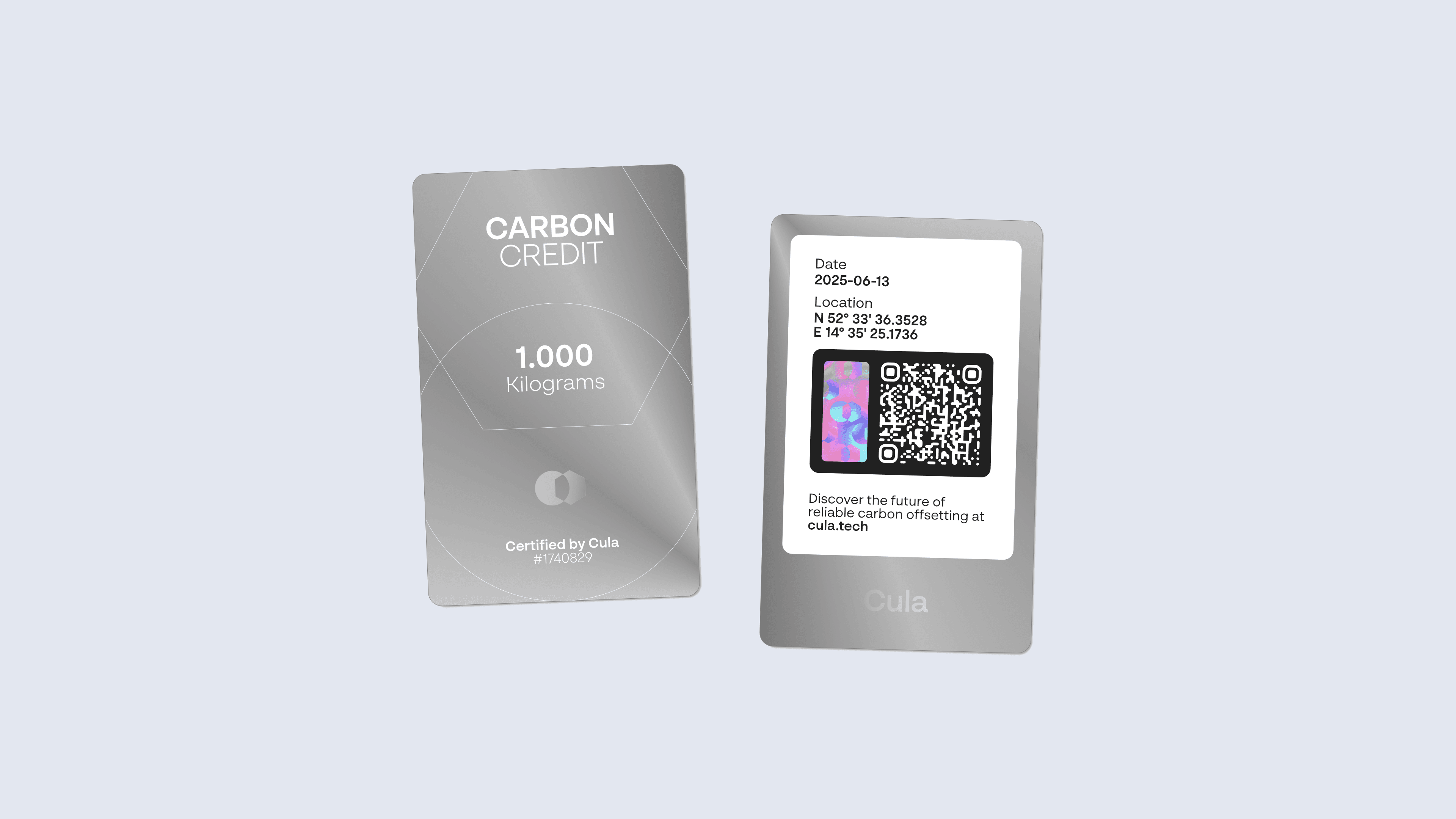
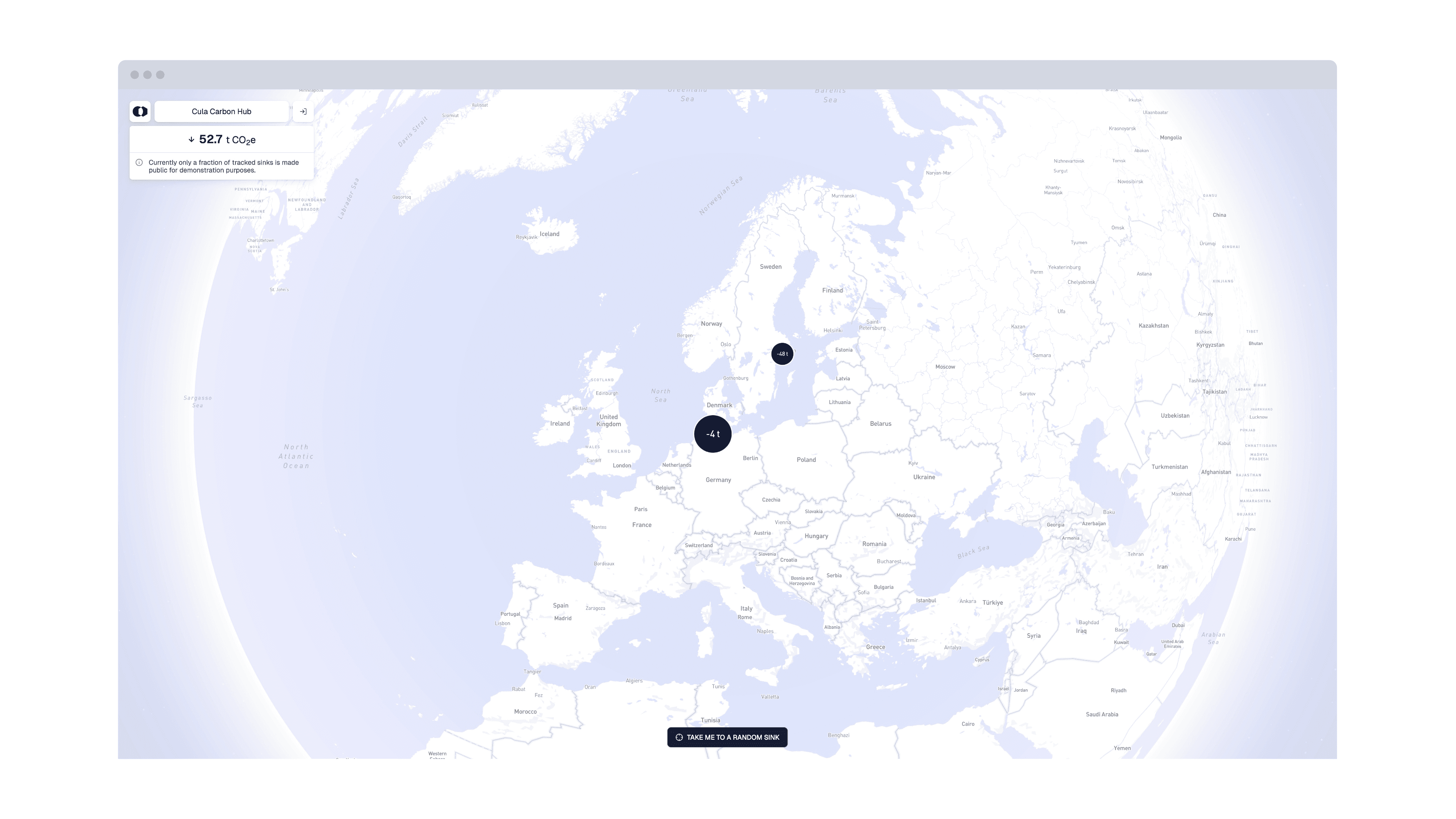
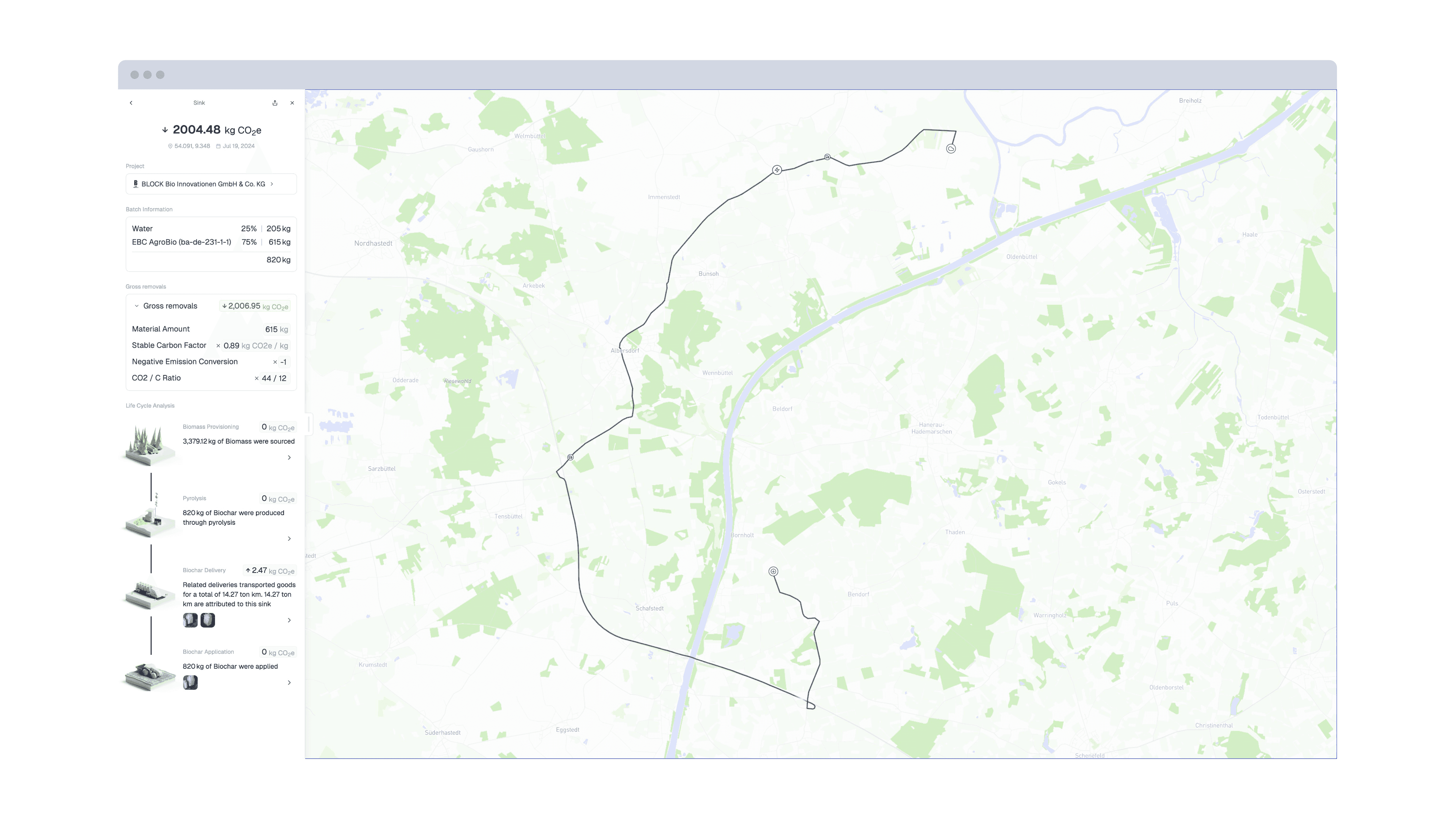
Technical complexity made legible. Cula's MRV platform tracks carbon removal end-to-end: biomass sourcing, transport, pyrolysis conditions, biochar quality, and final soil application. It captures dozens of data points per tonne of CO2e removed, generating a verifiable digital twin for each credit. Communicating that system to buyers, suppliers, and investors without losing either the rigour or the accessibility required sensitive translation work.
Competitive differentiation at zero revenue. At pre-seed, brand is one of the few things a startup fully controls. The identity needed to work hard: positioning Cula ahead of better-capitalised competitors and opening doors to the seed round before traction could do that work.
Building for longevity, not just launch. A rebrand at this stage that doesn't scale becomes a liability. The company either outgrows it or carries the cost of doing it again. The identity needed to be designed to grow with Cula across funding stages, customer segments, and eventual expansion beyond biochar into other carbon removal methodologies.
Trust as a communication problem. Even with a technically rigorous platform, the market Cula operates in had made buyers sceptical of claims they couldn't verify themselves. The ongoing communication challenge wasn't just explaining how the system works, it was making the human reality behind each certificate tangible and believable.
What we did.
Malpaux invested at the pre-seed stage and led Cula's brand redesign, committing both capital and design leadership.
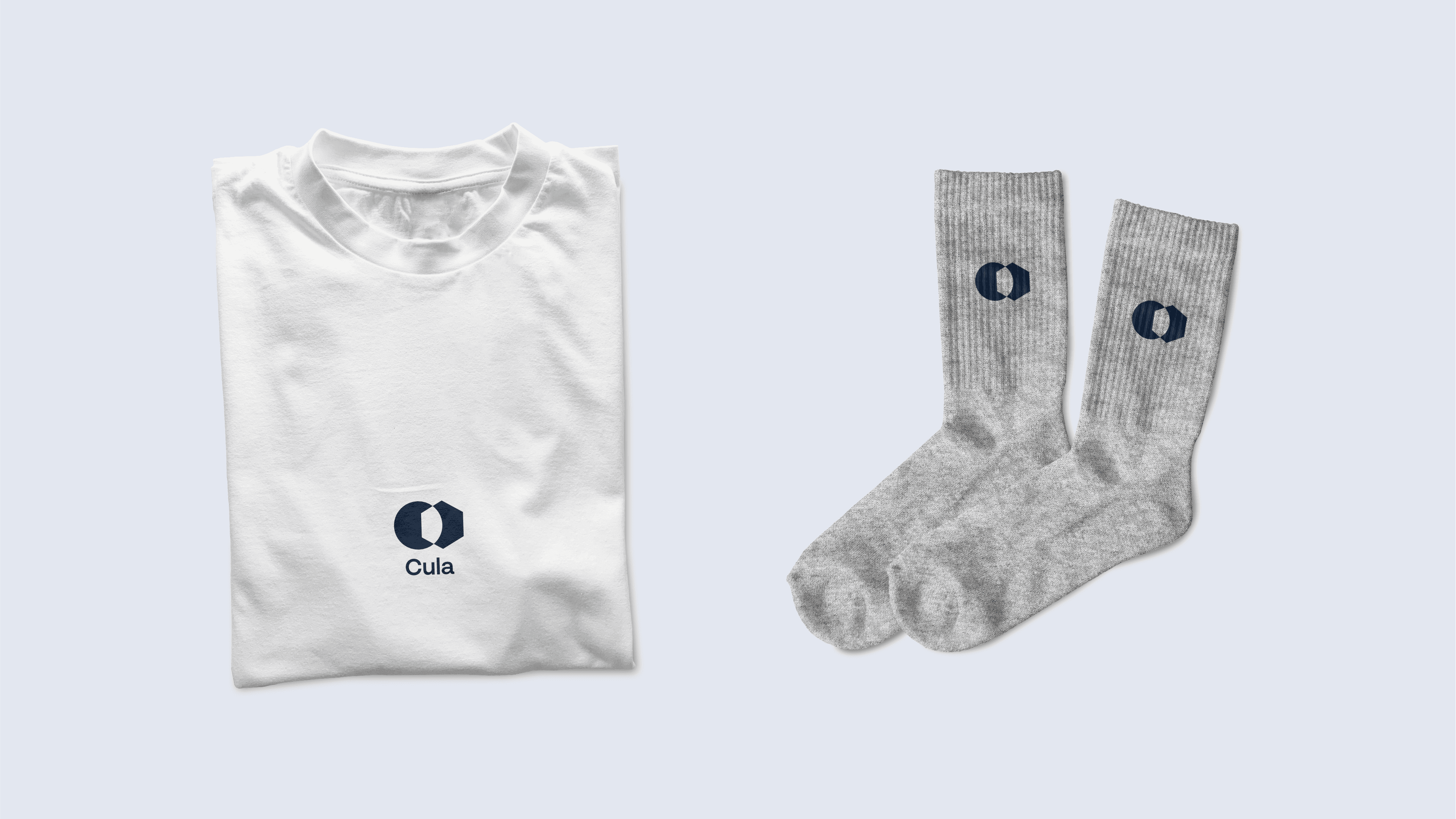
Rebranding and identity. The founders had the name. We built everything else: the visual identity, design language, and communication system that would carry Cula's positioning into the market. The design had to walk a precise line: rigorous enough for institutional buyers and scientific partners, distinctive enough to stand out from the generic green-and-blue palette of the carbon market, and credible enough to hold up in a seed fundraise.
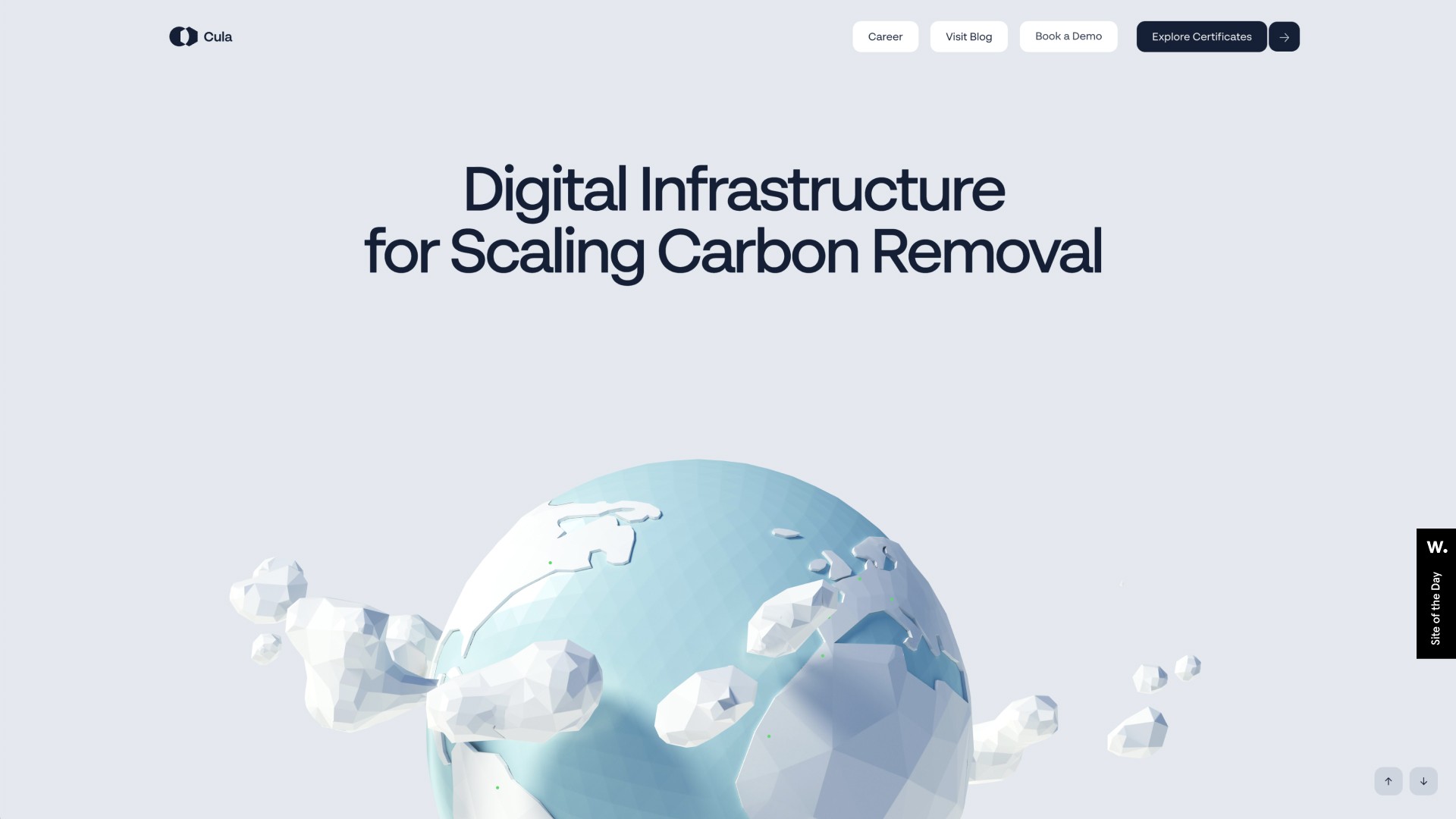
Website and 3D world. In partnership with Refokus, we created a website that explains the biochar carbon removal process through an interactive 3D environment, making the full chain of custody from biomass to verified credit tangible and navigable for any visitor. For a company whose entire value proposition is transparency and traceability, the website itself had to demonstrate what that means in practice.
Strategic positioning. The visual and communication work was grounded in a clear market positioning: Cula is not a certificate issuer or a marketplace. It is digital infrastructure. That framing shapes how buyers, suppliers, and investors understand the product, the competitive moat, and the long-term opportunity.
Carbon Stories film series. In July/August 2025, we produced three short documentary films for Cula, the Carbon Stories series, shot on location at biochar facilities in Canada, Mexico, and Switzerland. Each three-minute film follows the operators and plant managers running a partner facility, with Cula team members working alongside them in the field. The films are addressed directly to the people Cula most needs to reach: pyrolysis plant operators weighing whether to adopt their MRV platform, who are typically sceptical of software companies that don't understand the physical realities of running a biochar facility. Rather than explaining what Cula does, the films show what it looks like to work with Cula on the ground, in a large industrial facility in Canada, a small family-run operation in rural Mexico, and a multi-site Swiss producer. Operators recognise themselves in the protagonists. That recognition does more for conversion than any product brochure could.
→ Watch Tierra Prieta
→ Watch Inkoh
Outcomes.
Cula closed their seed round in August 2024. The website was awarded Site of the Day on Awwwards and was featured by Webflow — recognition that reflects both the design quality and the effectiveness of the communication. Cula has established one of the most mature MRV systems in the biochar space and is actively partnered with carbon removal suppliers and buyers across Europe and globally.
The Carbon Stories series extended that communication strategy into a new register: from explaining the system to showing the people inside it, across three countries and three very different operational realities.
Lessons.
In broken markets, trust is the product. Cula's technical platform is the mechanism, but trust is what buyers are actually purchasing. Every brand decision was evaluated against a single question: does this make it easier or harder for a sceptical buyer to believe that this certificate is authentic?
Brand investment at pre-seed has asymmetric returns. For a company operating in a credibility-deficient market, a well-executed identity opens doors that traction cannot yet open. The seed round came faster because the brand reduced the interpretive work investors had to do.
Explaining complexity is a design problem. The 3D website was the answer to a genuine communication challenge: how do you make a multi-step, data-dense industrial process comprehensible and compelling in under two minutes? The format matched the problem.
Showing beats telling when your audience has been oversold to. Pyrolysis plant operators trust evidence they can recognise from their own experience. The Carbon Stories films work because they depict operational realities that operators know to be hard: connectivity problems, production pressure, compliance demands. Seeing those realities taken seriously is more persuasive than any feature list.
The best sales material for a technical platform is its users. The Carbon Stories films let Cula's partners position Cula, through their own words and their own working lives. In a market where trust is scarce, that's the strongest signal available.
The human story and the technical story are the same story. The Carbon Stories films are an extension of Cula's technical positioning. The reason biochar produced in rural Mexico or industrial Canada can generate a verified, traceable credit is precisely that Cula is present in the operational reality those films depict. One argument, made in two registers.
Operator investment means more than capital. The combination of pre-seed investment and embedded design leadership created a kind of partnership where the incentives were aligned, and the work was held to a higher standard than a typical agency engagement.